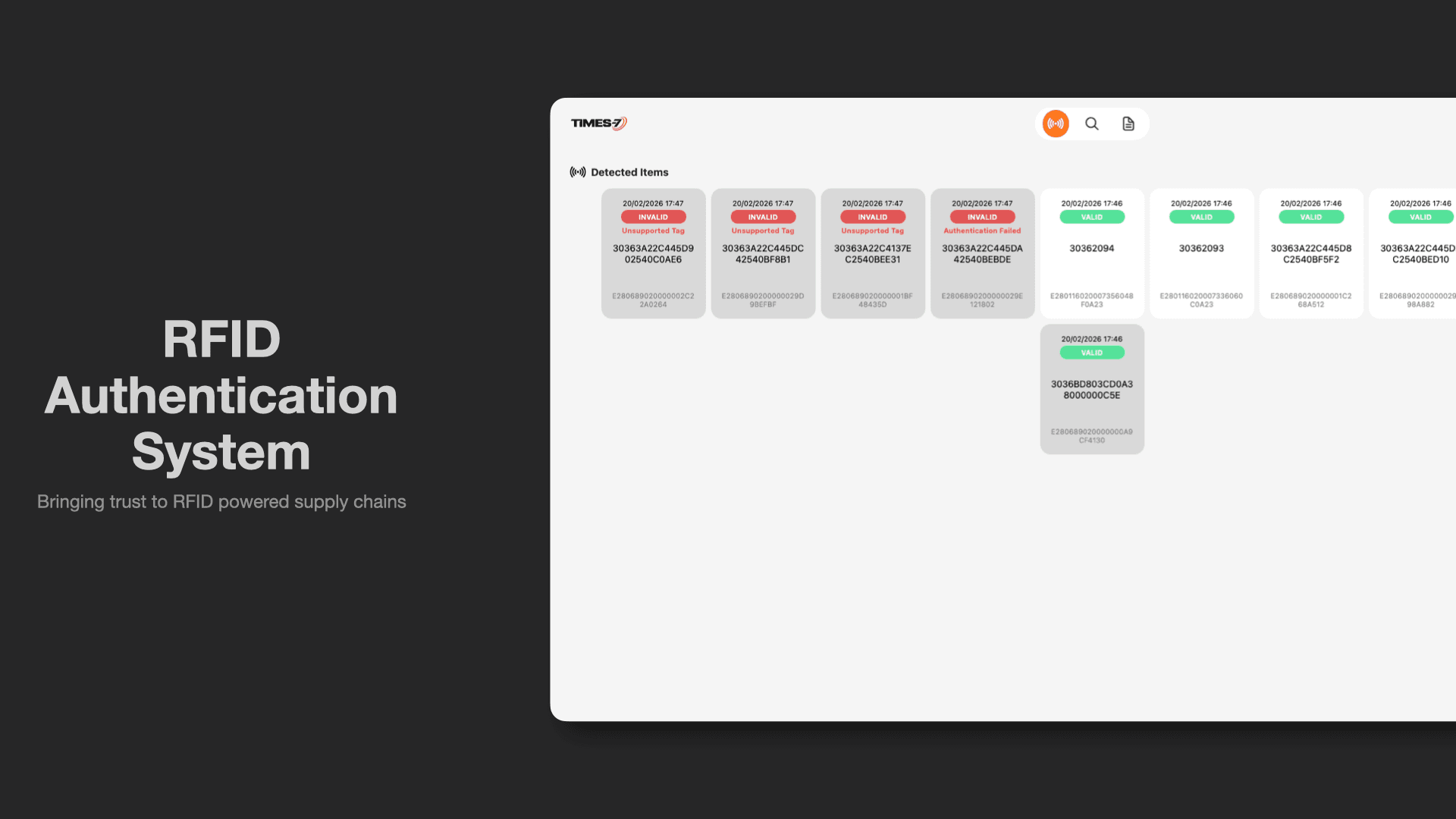
RFID Authentication System
Bringing trust and transparency to RFID powered supply chains
20.03.2026


Client Profile
This is a New Zealand based engineering company that specializes in the design and manufacture of RAIN RFID antennas. They are considered an industry leader in fixed RFID antenna technology, producing both standard and custom antenna solutions for a wide range of industries including retail, logistics, healthcare, food processing, aviation, and data centers. Their product lineup spans far-field, near-field, and specialized antennas such as doorway, ground, conveyor, and packing station configurations, complemented by compatible readers and accessories. With a global distribution network spanning the Americas, EMEA, and Asia Pacific, they bring precision-engineered technology from New Zealand to customers around the world.
The Problem
Our client, a New Zealand based engineering company specialising in RAIN RFID antenna technology, came to us with a specific need. They wanted an application that could allow users to scan, detect and verify the authenticity of IMPINJ RFID chips in real time. The goal was to ensure that every chip passing through their system was genuinely IMPINJ certified and had not been tampered with at any point along the supply chain.
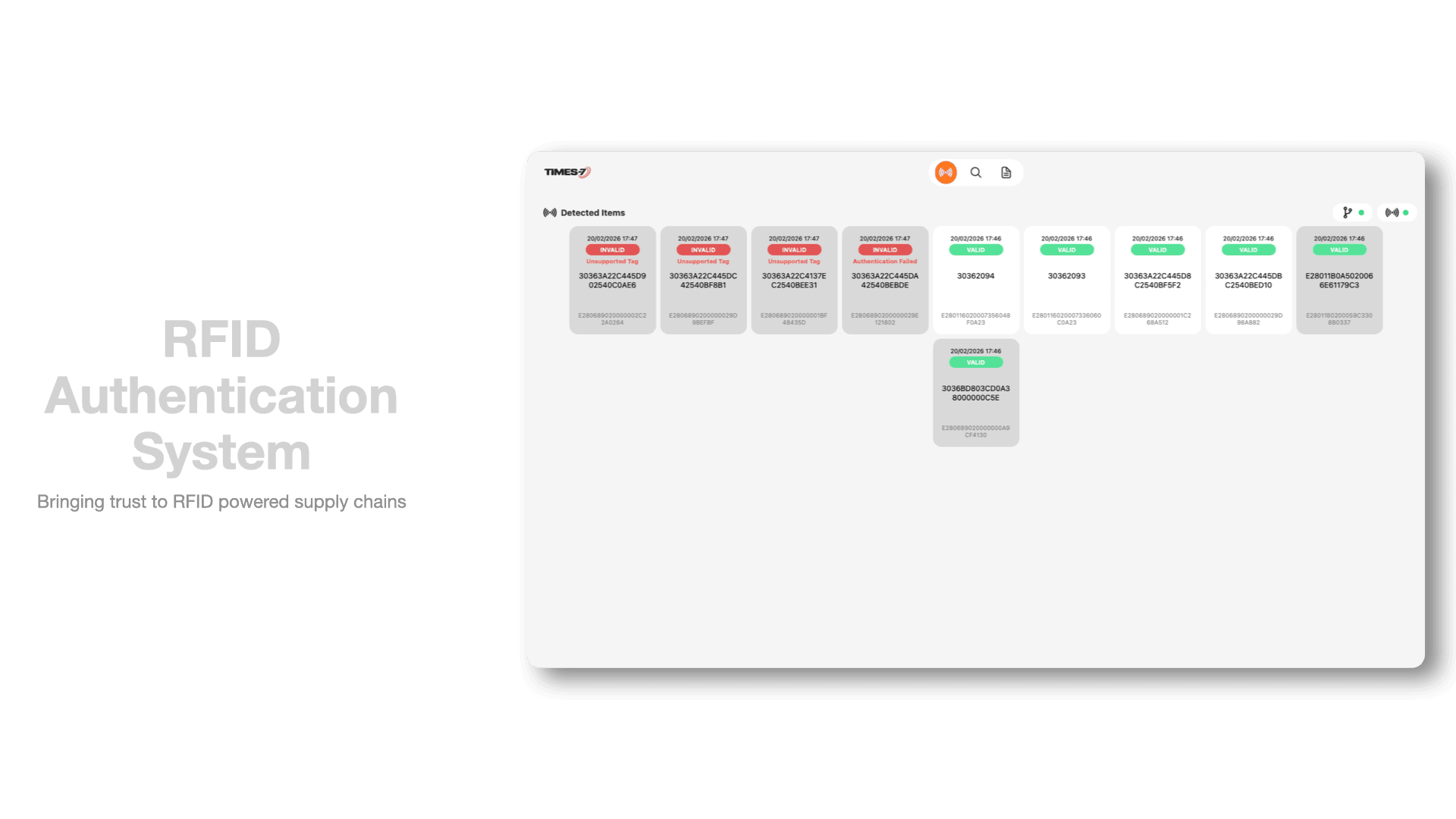
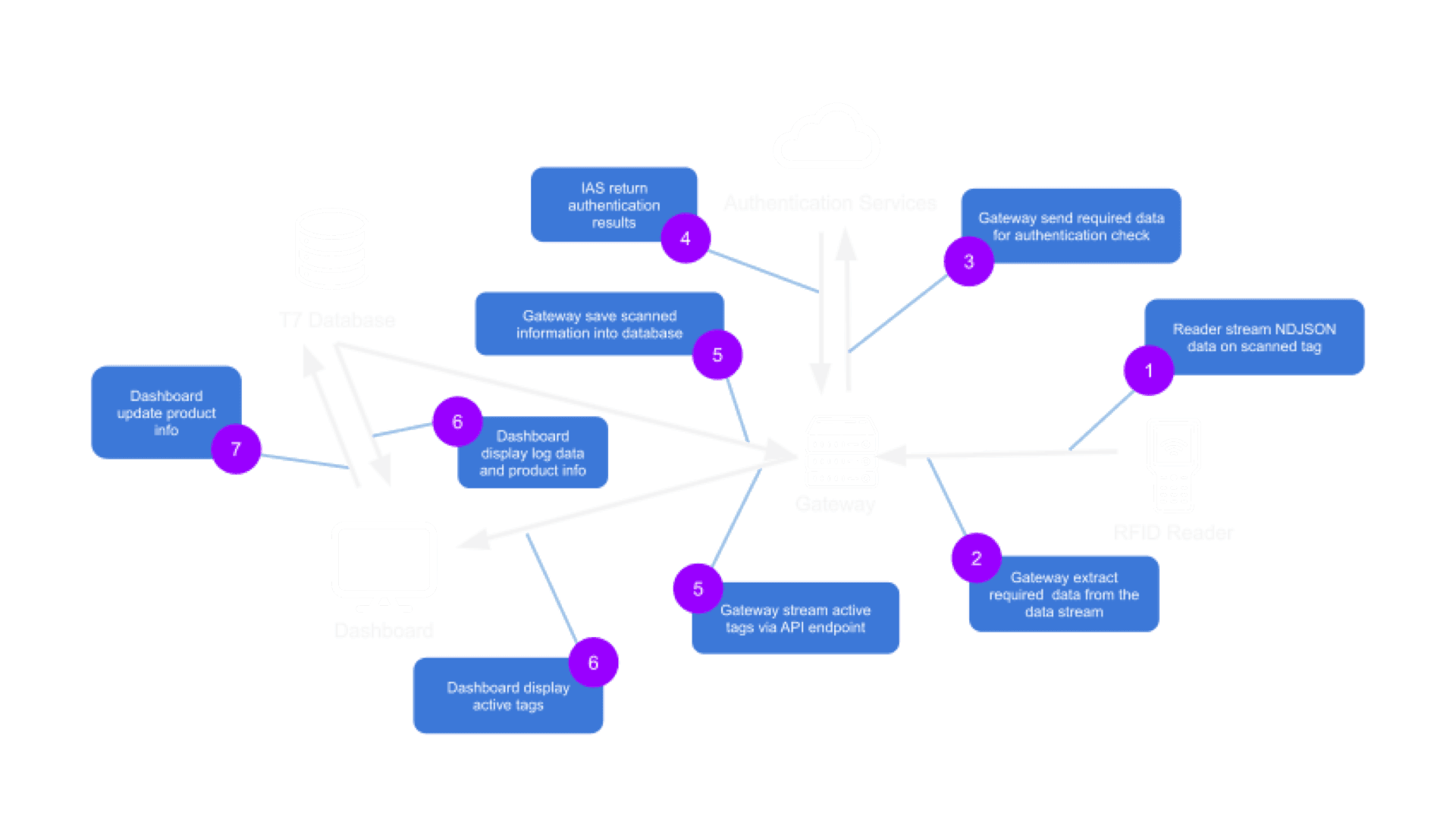
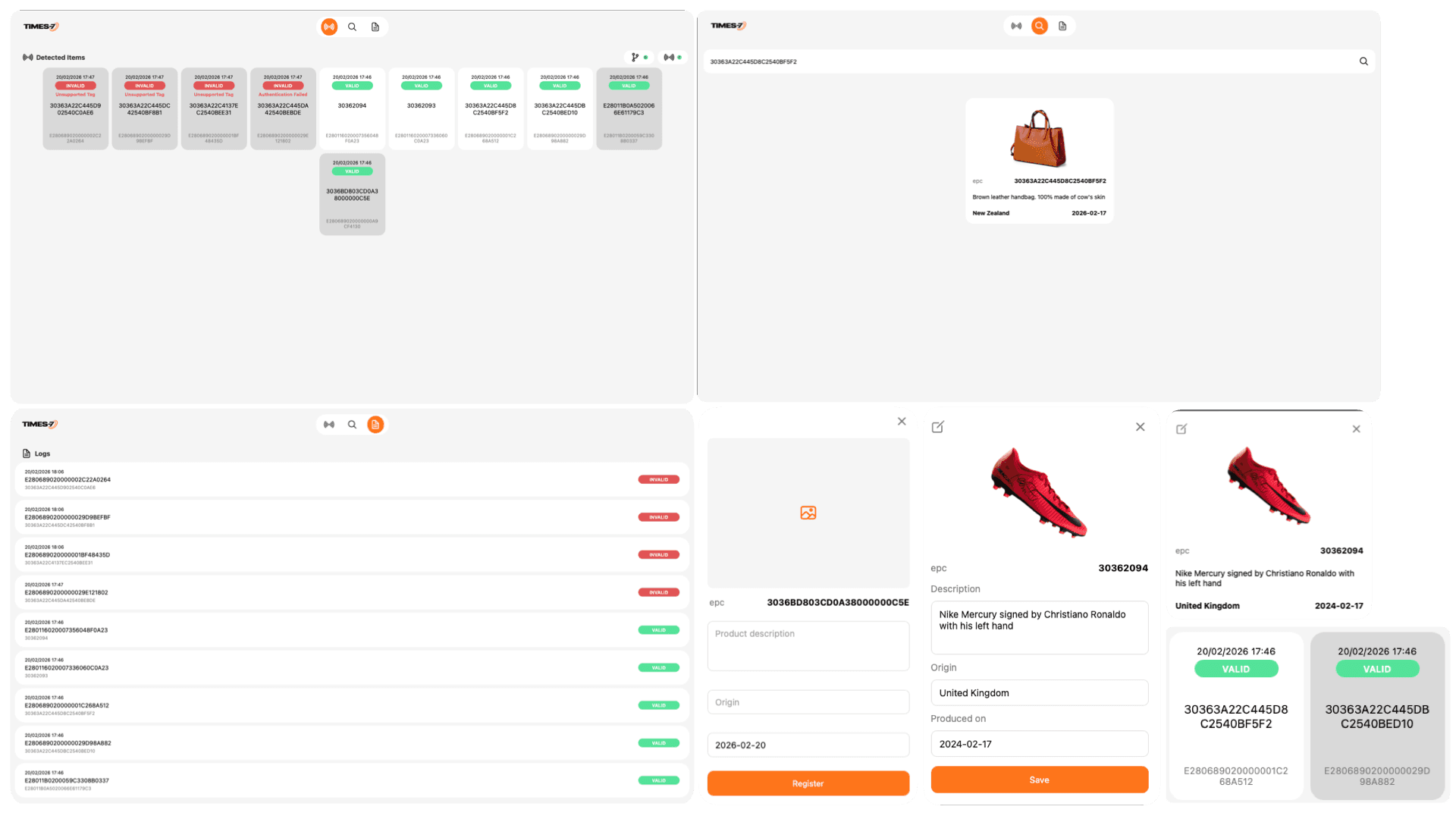
The application needed to integrate directly with their antenna hardware to detect chips as they were scanned, feed that data into a central system, and communicate with the IMPINJ Authentication Service to validate each chip on the spot. All of this had to be surfaced through a clean, intuitive dashboard where users could view results at a glance. Beyond just scanning, the dashboard also needed to support chip and product registration, with all records being saved into our client's database for traceability. For users who did not have access to an antenna, the system also provided a manual lookup option where they could search directly by RFID ID number to check authenticity on demand. The broader vision was to give every participant in the supply chain, from manufacturer to distributor to end receiver, a reliable way to confirm a product is genuine before it reaches its final destination.
The Challenge
The biggest technical hurdle was handling the sheer volume and velocity of incoming data. The antenna scanner updates its list of detected items every 0.5 seconds, which means the system needed to continuously process, deduplicate and authenticate a rapid stream of chip reads without dropping events or overwhelming the interface. Keeping the dashboard responsive and accurate under that kind of load, while simultaneously communicating with an external authentication service, required careful thought around data flow, state management and performance optimization.
The Solution
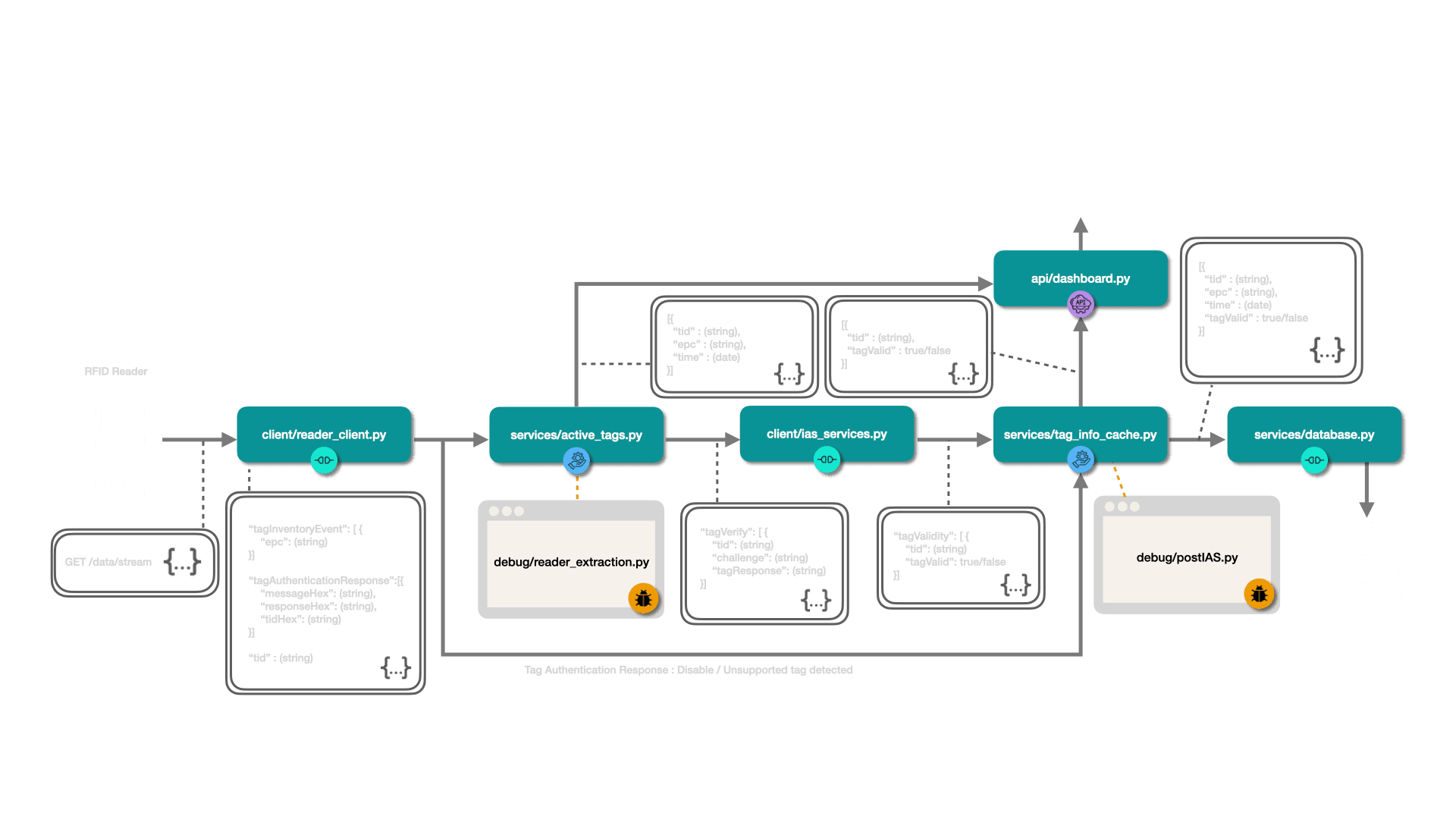
To handle the high frequency data stream coming from the antenna, we built an event driven backend that processes incoming chip reads asynchronously. Rather than authenticating every single read as it arrived, we implemented a smart deduplication layer that filters out repeated detections within a short time window, ensuring only new or changed chip states trigger an authentication request to the IMPINJ Authentication Service. This kept the system lean and prevented unnecessary API calls from building up under load.
On the frontend, we built a real time dashboard that updates live as scan results come in, giving users an immediate visual indicator of whether a detected chip is authentic, flagged or unregistered. The registration flow was designed to be straightforward, allowing users to attach product information to a chip record and commit it to the client's database in just a few steps. For users without antenna access, the manual search feature provided the same authentication lookup through a simple ID input, making the tool accessible at every point in the supply chain regardless of hardware availability.
To bring all of this together, we chose a modern stack that matched the demands of the project with the idea of easy to maintain and expand. FastAPI and Python powered the backend, giving us a high performance asynchronous foundation well suited for handling rapid bursts of incoming data. Supabase served as the database layer, providing a scalable PostgreSQL backed solution with built in real time capabilities that kept the dashboard in sync without additional infrastructure overhead. The application was initially scoped as a web platform. However, it was built using React Native since our client already having future plans to extend the capability to mobile devices, allowing users to scan chips directly from their phones. Building in React Native from the start meant that transition would be a natural next step rather than a rebuild from scratch.